

Ever felt like your mood and body just stop for a week each month? This can make work, relationships, and daily life seem impossible. For many women, this is Premenstrual Dysphoric Disorder (PMDD), and it can be very hard.
PMDD is a hormone-sensitive disorder that causes severe mood, thinking, and physical symptoms. These symptoms happen in the luteal phase of the menstrual cycle. Unlike Premenstrual Exacerbation (PME), PMDD is not just a worsening of an existing condition. It can lead to extreme irritability, depression, panic, brain fog, and physical pain. Research also shows it can increase the risk of suicidal thoughts and self-harm.
This article explores if PMDD is considered a disability under U.S. law and medicine. You’ll learn about PMDD, its impact on work and daily life, and what the Americans with Disabilities Act (ADA) might mean for you. You’ll also find out about the documentation and treatments expected.
Content is reviewed by Dr. Helloyze Ferreira Ancelmo (CRM-GO 31293). It connects to resources on reproductive mental health, nutrition for hormonal health, mood regulation supplements, and women’s mental health via Vidah Plena pages.
Key Takeaways
- PMDD is a distinct, cyclical reproductive mental health disorder with predictable severe PMDD symptoms.
- PMDD can severely impair work and daily functioning during symptomatic phases.
- Whether PMDD is a disability depends on medical severity, documentation, and legal standards like the ADA.
- Accurate diagnosis and symptom tracking are essential for workplace accommodations or legal protection.
- This article outlines medical facts, legal pathways, and practical steps you can take next.
Quick Answer
You can get protections if PMDD really limits your life while symptoms are present. PMDD often qualifies as a disability in the U.S. because it’s a condition that severely affects emotions and daily life.
Legal protections usually apply under the Americans with Disabilities Act, the Family and Medical Leave Act, and state leave programs. If you need time off or changes at work, start with HR or your leave administrator. They can help with medical papers and requests for work changes.
You don’t always have to tell your boss about your PMDD. You can share details through HR or a leave system. This way, you can ask for work changes without telling everyone at work.
But, there are some limits. FMLA rules depend on your employer’s size. State leave programs vary in what they offer. Whether you qualify under the ADA and PMDD depends on how much your symptoms affect your daily life and if your employer can make changes.
To claim your rights and document symptoms, look at resources on workplace rights with PMDD. Also, check out information on PMDD diagnosis and how employers handle it. Knowing your rights helps you ask for leave, flexible schedules, or changes in your job duties with more confidence.
Key Takeaways
PMDD is a real condition that affects your life. It can make it hard to function during certain times. If it really limits you, you might qualify for disability benefits.
It’s important to keep track of your symptoms. Record your mood, sleep, pain, and how it affects your work. Ask your doctor to note how PMDD impacts you in your medical records.
There are legal ways to protect your job. The Americans with Disabilities Act requires employers to make reasonable accommodations. The Family and Medical Leave Act gives you up to 12 weeks off without losing your job. Some states offer paid leave too.
When asking for help, be clear and practical. Use FMLA and ADA requests together. Share only what you need to with HR and your doctor.
PMDD affects both employers and employees. It can lead to missed work, less productivity, and more costs. These issues affect both your wallet and your employer’s bottom line.
Having solid evidence is key for disability claims. Keep symptom logs, get your doctor to link symptoms to limits, and document your treatment. This will help with work adjustments and benefits.
| Action | Why it Matters | Practical Step |
|---|---|---|
| Track symptoms | Shows the cyclical pattern clinicians and adjudicators need | Use daily mood and symptom diary for 2–3 cycles |
| Ask for pmdd accommodations | Makes work performance sustainable during symptomatic periods | Request flexible scheduling, remote days, or temporary duty changes |
| Combine legal supports | Maximizes job protection and leave options | File FMLA if eligible and submit ADA accommodation notice |
| Prepare documentation for benefits | Improves chances for approved disability benefits | Include clinician statements, symptom logs, and treatment records |
| Protect privacy | Maintains control over sensitive medical information | Share limited medical details with HR and use confidential channels |
What Is PMDD?
PMDD is different from regular premenstrual changes. It’s a condition with at least five symptoms that start after ovulation and get better soon after your period starts. These symptoms must be tracked for two cycles and must really affect your daily life.
People with PMDD often feel extreme mood swings, get really irritable, and feel anxious or depressed. They might also have trouble focusing, sleep issues, physical pain, and problems with making decisions. These symptoms are usually linked to their menstrual cycle and can really impact their work or personal life.
PMDD isn’t about hormone levels being off. You have normal hormone cycles, but your brain reacts differently to these changes. Studies show that how your brain reacts to hormones, including GABA-A receptors and gene expression, plays a big role in PMDD.
It’s important to know that PMDD is different from other mood disorders. PME is when a condition gets worse before your period, but PMDD has specific timing and symptoms. This is why PMDD is listed under depressive disorders in the DSM-5, even though it’s not caused by depression.
If you’re looking for help or resources, check out the women’s mental health pages for more information. For practical tips on managing symptoms, visit the Vidah Plena PMDD overview.
| Feature | PMDD | PME / Other Mood Disorders |
|---|---|---|
| Timing | Luteal phase, resolves after menses begins | May be continuous or not tied to cycle |
| Number of core symptoms | Five or more with functional impairment | Varies by diagnosis |
| Biology | CNS sensitivity to normal hormone changes; neurosteroid effects | Underlying mood disorder biology or mixed causes |
| Diagnosis method | Prospective daily charting across at least two cycles | Clinical history and symptom course |
| Common pmdd symptoms | Mood lability, irritability, anxiety, depression, brain fog, sleep and pain issues | Symptoms of underlying disorder, may worsen premenstrually |
| Impact on reproductive mental health | Significant impairment in work, relationships, and quality of life | May compound preexisting reproductive mental health concerns |
How Severe Can PMDD Become?

PMDD can vary a lot. For some, it’s just a small monthly issue that you can plan for. But for others, it can really disrupt life, affecting relationships, sleep, and daily tasks.
At its worst, managing daily life becomes hard. Simple tasks at work or home can feel too much. This can lead to missing work, job instability, and big financial losses.
PMDD is also linked to a higher risk of suicidal thoughts and actions. The risk goes up during the worst times, with studies showing more suicidal thoughts and attempts. Not getting the support you need can make this risk even higher.
Perimenopause can make things even tougher. Irregular cycles mean more unpredictable times of feeling bad. This makes it harder to figure out what’s happening and how to help.
If you’re dealing with severe PMDD symptoms, planning for emergencies and regular doctor visits are key. Use resources like Vidah Plena and national suicide prevention lines if you feel like you’re in danger. There are also resources for dealing with PMDD at work that can help you get the support you need.
What to watch for:
- Marked decline in work performance or attendance during symptomatic weeks
- Inability to perform basic self-care tasks when symptoms peak
- Escalating pmdd suicide risk, such as persistent suicidal thoughts or planning
- Increased frequency or unpredictability of episodes in perimenopause
Spotting PMDD early, keeping good records, and having a safety plan can help. Talk to your doctor about treatments and support that fit your situation.
Is PMDD Recognized as a Medical Condition?
PMDD is listed in the DSM-5 under Depressive Disorders. This is because PMDD shows a specific set of symptoms that start in the luteal phase and stop with the start of menses. To get a pmdd diagnosis, symptoms must be checked over at least two menstrual cycles.
The DSM-5 PMDD classification groups disorders by symptoms, not biological cause. This doesn’t mean PMDD is just a mood issue. Studies show it’s linked to hormonal changes in the brain.
Special clinics and research centers focus on PMDD. Places like Jean Hailes for Women’s Health and Cabrini Women’s Health Centre in Australia test treatments. They show the importance of PMDD research and care.
When you see a doctor, they will check if you meet the pmdd diagnosis criteria. They will look at when and how bad your symptoms are. This helps you get the right treatment for your mental health.
More resources are coming out to help understand PMDD. Vidah Plena has pages on diagnosis and specialist care. These resources help patients understand what to expect during evaluation and treatment.
Can PMDD Qualify as a Disability?
Many wonder if premenstrual dysphoric disorder (PMDD) can be considered a disability at work. It depends on how much PMDD affects your daily life and job when symptoms are bad. You might qualify if medical proof shows PMDD severely impacts activities like focusing, sleeping, or moving around.

ADA Considerations
The Americans with Disabilities Act (ADA) protects workers with disabilities. It includes episodic conditions that severely limit major activities during flare-ups. For PMDD, keep records of how bad episodes are and how they affect your job.
You don’t have to tell your boss about your condition. Share it with HR or the leave administrator to start the process. Companies with 15 or more employees and all state and local governments must follow the ADA. You’ll work with HR to find reasonable adjustments.
Workplace Accommodations
Workplace adjustments can help with PMDD. These might include flexible hours, working from home, or short breaks. You could ask for different shifts, easier tasks, or help with remembering things.
Leave can also be an accommodation. The ADA might require unpaid time off, even if FMLA doesn’t apply. FMLA or state leave can run at the same time as ADA leave. Keep records of your episodes and ask HR for accommodations with supporting documents. You might need to update your medical information if asked.
| Topic | What to Document | Possible Accommodations |
|---|---|---|
| Functional Impact | Frequency, duration, severity of episodes; effect on concentration and daily tasks | Flexible schedule, reduced workload, temporary duty changes |
| Leave Needs | How many days per cycle you are unable to work; patterns across cycles | Intermittent leave, unpaid leave as reasonable accommodation, concurrent FMLA/PFML |
| Communication | Preferred contact method, limits on meetings during peak symptom days | Recorded meetings, written instructions, fewer live presentations |
| Work Environment | Triggers at work, need for quiet or low-stimulus space | Quiet room access, flexible breaks, remote work options |
If you need help, many groups and doctors offer sample letters and advice. Use these tools to support your request and keep records of all talks with HR.
PMDD and Employment Challenges
PMDD can affect your work in big ways. You might miss days or struggle to focus at your desk. Tasks that need a lot of concentration or planning can be hard to do.
These ups and downs can lead to conflicts at work and lower productivity. Employers might see your performance dips as a sign of unreliability. This can make it hard to keep your job or move up in your career.
Stigma and gender bias can make things even tougher. Your symptoms might be seen as just “moodiness,” leading to delays in getting help. Managers who don’t get it can be hard to work with when you ask for flexibility.
Getting help can be tricky. You might need to ask for ADA accommodations while also using FMLA or state PFML if you qualify. Keep track of your absences and symptoms, and use HR to protect your privacy and document your needs.
State paid family and medical leave programs vary a lot. Places like California, Colorado, and New York have their own rules and benefits. Each program has its own rules for who can use it, how much you get, and how much notice you need.
It’s important to know your company’s policies on leave and medical certification. Use resources like career-support resources to get ready for talks about your rights at work and disability benefits.
Here are some steps you can take today. Start by tracking your symptoms and suggesting schedule changes. Ask for duties that are easier to do when you’re not feeling well. And ask for a plan in writing to help you at work.
If you want to ask for formal accommodations, be specific. Talk about what changes you need and when. This can help your employer understand what you need and avoid misunderstandings.
Comparison Table: Mild vs Moderate vs Severe PMDD
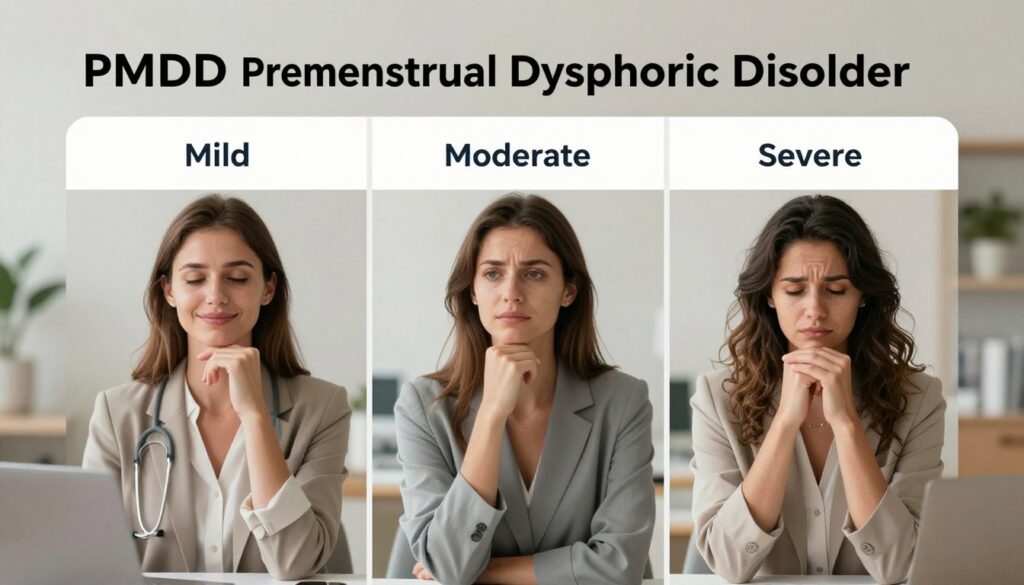
This comparison helps you understand the differences. It’s useful when talking to doctors or HR about how severe your PMDD is. Use this guide to track your symptoms over 2–3 cycles to help classify and document them.
Keep track of days you can’t work, the types and severity of your symptoms, and any work absences. Also, note any safety concerns. These details help in discussing accommodations and treatment plans.
| Domain | Mild PMDD | Moderate PMDD | Severe PMDD |
|---|---|---|---|
| Core impact | Symptoms cause discomfort and minor interference with routine tasks. | Symptoms cause regular interference with work, school, or relationships. | Symptoms produce significant functional impairment for multiple days per cycle. |
| Emotional signs | Brief premenstrual mood changes, irritability, mild sadness. | Frequent mood swings, marked irritability, emotional outbursts affecting interactions. | Severe depression, intense anxiety, or anger that disrupts self-care and safety. |
| Cognitive effects | Occasional difficulty concentrating; minor memory lapses. | Noticeable cognitive impairment several days each cycle; reduced focus and productivity. | Marked inability to concentrate; cognitive dysfunction may prevent safe work performance. |
| Work/school | Usually maintain performance with minimal adjustments. | Reduced productivity; need for flexible scheduling or brief intermittent leave. | May be unable to work for symptomatic windows; could warrant FMLA or ADA accommodations. |
| Self-care | Routine self-care preserved; daily tasks remain manageable. | Occasional difficulty with self-care on worse days; needs support intermittently. | Basic self-care may be prevented during symptomatic periods; require significant support. |
| Safety | Low risk; no persistent safety concerns. | Elevated risk during peaks; monitoring recommended. | Increased risk of suicidal ideation or self-harm during symptomatic windows; urgent clinical attention may be needed. |
| Recommended actions | Symptom tracking; minor workplace adjustments; discuss with clinician. | Prospective tracking for 2–3 cycles; document days impaired; request flexible scheduling or intermittent leave if needed. | Comprehensive documentation; consider FMLA, ADA accommodations, and urgent clinical interventions including medication changes or hospitalization. |
| Documentation tips | Note symptom days and brief notes on impact. | Record work absences, reduced productivity, and relationship effects. | Include days incapacitated per cycle, safety incidents, and clinician reports to support disability claims. |
Use tools like Vidah Plena symptom trackers to gather data. Keeping detailed records helps make your PMDD severity clearer when talking to doctors or HR.
If you see signs of severe PMDD symptoms, get medical help right away. Document any safety concerns for quick action.
Medical Documentation Requirements
You need clear doctor’s notes to ask for leave, work changes, or benefits. A good medical certification should list your diagnosis, when symptoms happen, and how they affect your work and daily life.
Include how often and long symptoms last. Ask your doctor to explain the expected pattern and how bad it will be. Also, mention any treatments you’ve tried and how they worked. This helps HR understand your needs better.
To qualify for FMLA, check if your employer has 50 or more employees within 75 miles. You must have worked there for 12 months and logged 1,250 hours in the last 12 months.
For FMLA, you usually have 15 days to get a doctor’s note. You might get leave for specific times or to work less. HR might ask for more notes if you need leave for a long time.
Under the ADA, focus on how symptoms limit your daily activities. Document how symptoms affect your life. HR might ask for more information during the process.
Try to use evidence from before your symptoms started. Keeping a symptom diary for 2–3 cycles is very helpful. Also, include your medication history, reports from occupational health, and records of when you missed work.
Statements from family or coworkers can also support your claims. They should mention times when you missed work or were unsafe. These should be used with your doctor’s notes.
Here’s a tip: ask your doctor to highlight the pattern of symptoms, how often they happen, and how they affect you. Keep all your medical records in order and send them through HR to keep your privacy safe.
| Documentation Element | What to Include | Why It Helps |
|---|---|---|
| Clinician letter / medical certification | Diagnosis, cycle timing, functional limits, treatments, prognosis | Forms the core of pmdd disability documentation for employers and insurers |
| Symptom diary | Daily mood, energy, concentration, dates for 2–3 cycles | Provides prospective pmdd proof for employer and benefits adjudicators |
| Treatment history | Medications, psychotherapy, response, dates | Shows efforts to manage condition and informs reasonable accommodations |
| Workplace records | Absence logs, performance notes, occupational health reports | Demonstrates real-world impact on job duties and attendance |
| Third-party statements | Signed notes from family, coworkers, or supervisors | Corroborates reported limitations when matched with medical notes |
| Crisis care documentation | ER visit notes, hospitalization records, safety plans | Supports claims of severe episodes and need for urgent care |
For templates and trackers, look into clinician letter formats and symptom trackers from Vidah Plena. These tools can help you gather strong medical documentation for pmdd and pmdd disability.
Keep copies of everything you send in. Having clear, consistent records can help you get the support you need for leave, work changes, or disability benefits.
Treatment and Symptom Management
You have many options for treating pmdd. These include medicines like sertraline, which can be taken daily or just during the luteal phase. Hormonal treatments, like combined oral contraceptives with drospirenone, can also help.
Psychotherapy is key in managing pmdd. Cognitive-behavioral therapy teaches you coping skills and helps you manage negative thoughts. Keeping a symptom journal helps you and your doctor adjust your treatment plan.
Good nutrition and supplements can also help. Eating regular meals and avoiding caffeine and alcohol near the luteal phase is important. Always talk to your doctor before taking any supplements.
If these steps don’t work, ask for a referral to a specialist. They can offer more advanced treatments like hormonal suppression or medication changes. They can also help design your next treatment plan.
Workplace adjustments are also important. Simple changes like flexible schedules or remote work can help. Keep track of how these changes affect your symptoms.
Here’s a quick comparison to help you talk to your doctor:
| Approach | Typical Onset | Primary Benefits | When Used |
|---|---|---|---|
| SSRIs (sertraline, fluoxetine) | Days to weeks | Rapid mood relief, flexible dosing | First-line for core mood symptoms |
| Hormonal therapy (combined pills, drospirenone, GnRH) | Weeks to months | Reduces cyclic hormonal triggers | When symptoms clearly tied to cycle or SSRI inadequate |
| Cognitive-behavioral therapy | Weeks to months | Skills for coping, relapse prevention | Adjunct or primary when medication not preferred |
| Lifestyle, pmdd nutrition, pmdd supplements | Varies | Supports overall resilience and symptom reduction | Complementary to medical and psych treatments |
Keep a record of your symptoms, treatments, and side effects. This will help you and your doctor refine your treatment plan. Always talk openly about your medications, nutrition, and supplements to ensure a safe and effective treatment.
Legal Considerations in the United States
In the U.S., you have federal laws that protect you when PMDD impacts your job. The Americans with Disabilities Act (ADA) covers conditions like PMDD if they limit a major life activity. This means you can ask for work adjustments, and your employer must try to help.
The Family and Medical Leave Act (FMLA) gives you job-protected leave for certain situations. You can take leave for treatment or managing symptoms. Using both ADA and FMLA can help you get the support you need at work and time off for medical reasons.
Private employers with 15 or more employees must make reasonable accommodations for you. Employers with 50 or more employees in a 75-mile radius must follow FMLA rules for unpaid leave. Knowing your employer’s size and location is important when asking for help.
State laws on paid family and medical leave (PFML) vary. Some states and the District of Columbia offer paid leave with different rules and benefits. PFML can be used alongside FMLA, depending on your situation and the state’s rules.
To protect your rights, keep a record of your symptoms and how they affect your work. Get a clear medical note from your doctor. File requests through HR or the leave administrator. Use templates for ADA requests and FMLA notices to keep track of your communications.
If your employer denies your requests or treats you unfairly, seek legal advice. Talk to an employment lawyer or a disability rights group. They can help you understand your options and possible claims for pmdd disability benefits.
| Issue | What to Check | Action Steps |
|---|---|---|
| ADA Coverage | Whether PMDD substantially limits major life activities | Request accommodation; provide medical documentation; begin interactive process with HR |
| FMLA Leave | Employer size (50+ in 75-mile radius) and your eligibility | Apply for intermittent or continuous leave; submit medical certification |
| State PFML | State program rules, eligibility, and benefit amount | Check state PFML guide; file claim; coordinate with FMLA when possible |
| Employer Obligations | Interactive process and reasonable accommodations for 15+ employee employers | Document requests; propose workable accommodations; keep written records |
| Legal Help | Denial of accommodation, retaliation, confidentiality breaches | Consult an employment lawyer or disability rights group; preserve evidence |
Use resources like Vidah Plena legal materials, state PFML guides, and ADA templates to prepare your requests. Keep a record of dates, symptoms, and communications. This will help support any claim for pmdd disability benefits as you navigate the legal landscape.
Evidence Summary

Looking at clinical, functional, and policy studies, we see a clear picture of PMDD. Epidemiology shows PMDD affects about 3–8% of menstruating people globally. This highlights its prevalence and the need for medical attention.
Laboratory and imaging studies are key in understanding PMDD. They show how normal hormone changes can affect some people more. Studies on GABA-A receptors and gene expression help explain why symptoms occur and how severe they can be.
Functional studies show how PMDD impacts daily life. People with PMDD often miss work, have lower productivity, and struggle with social roles. Economic studies also show the financial toll, including lost wages and increased healthcare costs.
Safety data is alarming. PMDD research shows higher rates of suicidal thoughts and attempts during symptom times. Lack of understanding and support increases these risks.
Administrative reviews show a problem with cyclical conditions being misunderstood. Disability systems often deny support, leading to emergency care and welfare costs.
Civil society and clinical programs are stepping up. State PFML programs in the U.S. and services at Jean Hailes and Cabrini Women’s Health Centre offer help. Advocacy by IAPMD and The PMDD Project also plays a role.
The scientific and policy landscape for PMDD is mixed. Research supports a biological cause and shows harm, but practice often lags behind.
Considering all the evidence, we see a clear need for better care and policies. Targeted services, workplace support, and ongoing research are essential to improve care and safety for those with PMDD.
Real-World Case Examples
Below are three anonymized, women-specific pmdd cases. They show common paths in both clinical and workplace settings. These examples highlight how documentation, employer contact, and legal tools can change outcomes for those with severe symptoms.
Case 1 — Workplace accommodation success. A marketing manager tracked her cyclical symptoms for three cycles. She asked HR for an ADA-supported accommodation: intermittent remote work two days per cycle. Her clinician provided prospective symptom charts and a clear letter.
HR coordinated intermittent FMLA for certified episodic days and allowed flexible scheduling. Absenteeism dropped and productivity stabilized. This shows how early tracking and clinician documentation can help in the workplace.
Case 2 — Missed recognition and crisis. A senior analyst experienced months of mood swings and cognitive decline. Colleagues dismissed it as stress. Lack of prospective symptom logs delayed referral.
Symptoms escalated to an emergency psychiatric visit and inpatient stabilization before a specialist confirmed PMDD. The delayed diagnosis caused cumulative work impairment and strained relationships at the office. This scenario highlights the importance of prospective tracking and early clinician involvement.
Case 3 — Benefits application strengthened by records. A nurse applied for paid-family-medical-style benefits after documenting consistent symptom diaries, clinician letters, and workplace absence records over six months. The employer-approved PFML-like claim was supported by medical notes showing cyclical impairment.
Combining detailed symptom evidence with HR records improved the nurse’s eligibility for disability benefits and reduced adjudication delays. Use this model when preparing applications for disability benefits.
Key lessons from these women-specific pmdd cases.
- Prospectively track symptoms with dates and severity to show cyclical patterns.
- Ask clinicians to write focused letters that describe functional impact and timing.
- Use HR channels to request accommodations while protecting your privacy.
- Combine legal tools when available: ADA accommodations, FMLA intermittent leave, and state PFML or paid-leave programs.
For guidance on preparing documentation and applying for leave, consult the Vidah Plena guides linked in practice materials. Review prospective-tracking research such as the study on online peer-support and comorbidity for context on symptom variability and treatment approaches.
These pmdd real world examples and pmdd workplace stories are meant to help you see practical steps you can take. If you need an action plan, start by logging symptoms, scheduling a clinician visit, and reaching out to HR to discuss privacy and reasonable accommodations.
When to Seek Medical Help
If you see signs of a pmdd crisis like suicidal thoughts or self-harm, get help right away. Call 911 or visit the nearest emergency room. Crisis hotlines like the National Suicide Prevention Lifeline offer 24/7 support.
Seek help for severe pmdd if you can’t take care of yourself or do daily tasks. If your mood and behavior suddenly stop you from functioning, you need urgent help. This is when you should call emergency services or see a psychiatric team.
Keep track of your cycles for 2–3 months before you see a doctor. This helps you understand your symptoms better. Bring your symptom diary, treatment history, and any notes about work or relationship problems to your appointment. Ask your doctor to write down how often and how long your symptoms last and how they affect your daily life.
See a doctor regularly if PMDD symptoms are affecting your work, school, or relationships. If you’re struggling to keep a job or feel unsafe, you should also seek help. Symptoms getting worse, becoming unpredictable, or happening during big life changes like perimenopause are also reasons to reassess.
When you’re getting ready for a doctor’s appointment, ask for referrals to specialists in reproductive mental health or gynecology. PMDD clinics offer specific treatments that address hormonal and mood issues. If needed, ask for care that combines medication and therapy.
It’s important to have a safety plan if you’re thinking about suicide. Talk about your thoughts with your doctor, make a safety plan, and find people you can trust. Share crisis resources and consider reaching out to local services if you feel at risk.
Practical steps to take now:
- Start a simple symptom diary noting mood, behavior, and cycle day.
- List medications, supplements, and prior therapies.
- Document work or relationship impacts with dates and examples.
- Bring emergency contact names and a preferred clinician referral request.
Use reliable resources to find care and learn when to seek help for PMDD. For guidance on when to consult a psychiatrist or other services, visit how to know when to see a. This can help you find local clinics and crisis resources.
| Reason to Seek Help | What to Do | Who to See |
|---|---|---|
| pmdd crisis signs: suicidal thoughts or self-harm | Call 911 or go to emergency care; contact crisis hotlines | Emergency psychiatry, crisis team |
| Severe functional collapse on symptomatic days | Seek urgent outpatient or inpatient psychiatric assessment | Psychiatrist, reproductive psychiatrist |
| Regular interference with work or relationships | Schedule routine evaluation with documentation of cycles | Psychiatrist and psychologist |
| Worsening or unpredictable symptoms (perimenopause) | Request hormone-aware assessment and specialist referral | Gynecologist, reproductive mental health specialist |
| Need for coordinated care or documentation for work | Bring symptom diary and ask for clinician notes on impact | Primary care, psychiatrist |
Frequently Asked Questions (FAQ)
Can PMDD be a disability under the ADA?
Yes. If PMDD limits you in major life activities, it might qualify. Keep records of how it affects you and talk to your employer about what you need.
Will I lose my job if I request accommodations?
No. Your employer must try to make things work unless it’s too hard. You might also get leave under the Family and Medical Leave Act to handle your health.
Do I have to disclose my diagnosis to my manager?
No. You can keep your diagnosis private. Instead, send medical info to HR or another person, not your manager.
Can I use FMLA for PMDD?
Yes. If your job meets FMLA rules and you’ve worked there long enough, PMDD might qualify. You’ll need a doctor’s note to prove it.
Can I get paid leave for PMDD?
Possibly. Paid family and medical leave varies by state. Check your state’s rules to see if you can get paid leave for PMDD.
What evidence helps support claims?
Good evidence includes a symptom diary, doctor’s letters, and records of missing work. Also, show how treatment helps you function every day.
Who should I contact for tailored advice?
For advice that fits your situation, talk to HR, your doctor, or an employment lawyer. Use employer forms and state resources to help prepare your case.
Quick reference: common employer responses and your options
| Employer Action | Your Option | Typical Proof |
|---|---|---|
| Requests medical certification | Provide clinician letter and symptom diary | Signed note from psychiatrist, OB-GYN, or primary care provider |
| Denies accommodation citing undue hardship | Ask for written basis; consult an attorney if needed | Written denial and documentation of job goals and limits |
| Offers intermittent leave | Negotiate schedule or remote work when possible | Absence logs and a treatment plan showing periodic impairment |
For more help, look for resources from trusted employers and legal clinics. They can guide you in making the right requests and protecting your rights.
This FAQ is a quick guide on PMDD, how to ask for help at work, and what to document. It’s useful when talking to HR or your doctor.
Final Thoughts
PMDD is a real condition that affects your life cycle. It can be seen as a disability in the US. Knowing how laws like ADA, FMLA, and PFML apply is key. You need to show how PMDD limits your daily life and work.
Start by tracking your symptoms for a few cycles. Ask your doctor to write about how PMDD affects you. Then, ask for work changes that help you cope better.
Look into FMLA or PFML if you can. Also, see specialists to get better and feel less limited.
If you feel suicidal or really can’t function, get help right away. Join groups and clinics for support. They can guide you on your rights and treatment options.
Keep learning and getting help. Check out Vidah Plena’s info on PMDD, nutrition, and supplements. This article was checked by Dr. Helloyze Ferreira Ancelmo (CRM-GO 31293). Use this knowledge to fight for your rights and find good solutions with your doctors and employers.
FAQ
Is PMDD a disability under U.S. law?
PMDD can be considered a disability if it severely limits your daily activities. This includes working, concentrating, or participating in social events. The Americans with Disabilities Act (ADA) protects people with episodic conditions like PMDD.
Employers must provide reasonable accommodations under the ADA. The Family and Medical Leave Act (FMLA) also offers job-protected leave for eligible employees. State paid family & medical leave (PFML) programs provide additional support.
Do I have to tell my manager I have PMDD to get accommodations?
No, you don’t have to reveal your PMDD diagnosis to your manager. You can ask for accommodations through Human Resources or a leave administrator. Many people choose to provide documentation of their symptoms without sharing their diagnosis.
What documentation do employers typically need to support an ADA or FMLA request for PMDD?
Employers need a letter from your doctor that explains your PMDD diagnosis. It should detail the frequency and duration of your symptoms. It should also mention any treatments you’ve tried and your expected recovery.
Having symptom diaries, workplace absence records, and treatment history can strengthen your claim. These documents help show how PMDD affects your daily life.
What types of workplace accommodations might help someone with PMDD?
There are many accommodations that can help with PMDD. These include flexible work hours, remote work options, and short breaks. Employers can also adjust your duties or provide written instructions.
They might also offer leave or quiet spaces. Employers must work with you to find the best solutions unless it’s too hard for them.
Can I use FMLA for PMDD-related leave?
Yes, if your employer meets the FMLA size requirements. You must have worked for them for at least 12 months and have worked 1,250 hours in the past 12 months. PMDD can qualify as a serious health condition if your doctor says so.
You can take intermittent or reduced-schedule leave. This can also be used with state paid family & medical leave (PFML) programs.
Will requesting accommodations put my job at risk?
Employers must provide reasonable accommodations under the ADA. FMLA also protects your job if you’re eligible. It’s illegal for employers to retaliate against you for asking for accommodations.
If you face problems, talk to an employment attorney or a disability rights organization. They can help you understand your rights.
How should I track symptoms to support a disability or leave claim?
Start tracking your symptoms across at least 2–3 menstrual cycles. Record how many days you’re incapacitated each cycle. Note the types and severity of your symptoms.
Also, keep track of any work absences and healthcare visits. Use these records to show how PMDD affects your daily life.
What is the difference between PMDD and Premenstrual Exacerbation (PME)?
PMDD is a distinct disorder with specific symptoms that go away after your period starts. It requires tracking across cycles to confirm. PME, on the other hand, is when existing mental health conditions get worse before your period.
How severe can PMDD become and when is it considered severe enough for disability benefits?
PMDD can range from mild to severe. Severe cases can make it hard to take care of yourself or work. They can also increase the risk of suicidal thoughts or actions.
If PMDD severely limits your daily activities, you might qualify for disability benefits.
What biological mechanism causes PMDD?
PMDD is caused by unusual sensitivity to hormone changes in the brain. Research shows that differences in brain chemistry and gene expression play a role. This sets PMDD apart from other conditions.
Can state PFML programs help if I need paid leave for PMDD?
Yes, some states offer paid family & medical leave (PFML) programs. These programs can provide financial support while you’re on leave. Check your state’s program for details.
What treatments are evidence-based for PMDD?
Effective treatments include certain antidepressants and hormonal therapies. Some oral contraceptives and GnRH agonists can also help. Psychotherapy can improve coping and safety planning.
Nonpharmacologic strategies like sleep hygiene and stress management are also important. If first-line treatments don’t work, seek specialist care.
What should clinicians document to support legal protections for PMDD?
Clinicians should document your diagnosis, symptom patterns, and how PMDD affects your daily life. They should also note any treatments you’ve tried and your expected recovery.
Highlighting the cyclical nature of PMDD is key when applying for ADA accommodations or FMLA leave.
How common is PMDD and how does it affect employment?
PMDD affects 3–8% of menstruating people. It can lead to absenteeism, reduced productivity, and workplace conflicts. Without support, it can cause job instability and lead to leaving the workforce.
When should I seek immediate help for PMDD?
Seek emergency care if you have suicidal thoughts or are harming yourself. For routine care, see a doctor if PMDD interferes with your daily life or work. This is also true if symptoms worsen or become unpredictable.
What practical steps should I take now if I think PMDD is affecting my job?
Start tracking your symptoms for 2–3 cycles. Schedule a doctor’s visit with your symptom diary and treatment history. Ask your doctor to document how PMDD affects your daily life.
Contact HR or a leave administrator to learn about company policies. Discuss confidential medical certification. Explore FMLA or PFML if eligible, and request ADA accommodations through HR if needed.
What evidence increases the chance of a successful benefits or accommodation claim?
Strong evidence includes symptom diaries, doctor’s letters, and workplace records. Treatment histories and any crisis-care documentation also help. Detailed records that show predictable luteal-phase impairment are very persuasive.
Who should I contact if my employer refuses accommodations or retaliates?
If your employer denies accommodations or retaliates, talk to an employment attorney or a disability rights organization. You can also file complaints with the U.S. Equal Employment Opportunity Commission (EEOC) for ADA violations. State resources can help with PFML disputes.
Where can I find templates and tools to help with documentation and accommodation requests?
Use symptom trackers and doctor’s letter templates to document your PMDD. Many organizations and clinical resources offer ADA accommodation request templates and state PFML guides. Prepare documentation that focuses on how PMDD affects your daily life.
Are there specialized clinics or research centers for PMDD?
Yes, there are clinics and research centers focused on reproductive mental health. These places provide targeted care and trials for PMDD. Examples include Jean Hailes for Women’s Health and Cabrini Women’s Health Centre in Australia.
How does perimenopause affect PMDD assessment and management?
Perimenopause can make PMDD symptoms worse and more unpredictable. This can make tracking and managing PMDD harder. Clinicians may need to adjust treatment plans and you should document any changes in cycle regularity.
What practical tips reduce stigma and improve access to accommodations for PMDD?
Start tracking your symptoms and educate HR and supervisors about PMDD’s impact. Ask your doctor to document how PMDD affects you. Use formal HR or leave-admin processes to keep your information private.
Combining ADA accommodations with FMLA or PFML can offer strong workplace protections.